
Katrina on My Mind

**Note: I want to preface by saying all of these natural disasters are hard and devastating. I don’t seek to minimize one in favor of another but to point out how sometimes there is a difference in coverage and treatment of disasters, both natural and man-made, that is noticeable and something people may not see and this is my attempt to say…about that though.
The past couple of weeks we have seen catastrophic weather systems that have ravaged communities. The damage widespread. The loss of life is heartbreaking. And my heart goes out to everyone impacted both directly and indirectly.
As Helene was fading and Milton was approaching, I happened to be in New Orleans, a city I have been to quite a few times and where you cannot go two feet without reminders of the devastation of Katrina in 2005. And, as I am prone to do, it got me thinking. Thinking about how we approached the hurricane—both before and after— and the racial and political pieces that worked their way in. I’ll recap my thoughts, but what sparked me to write was a tweet I saw from Tim Wise, a senior fellow at the African American Policy Forum.
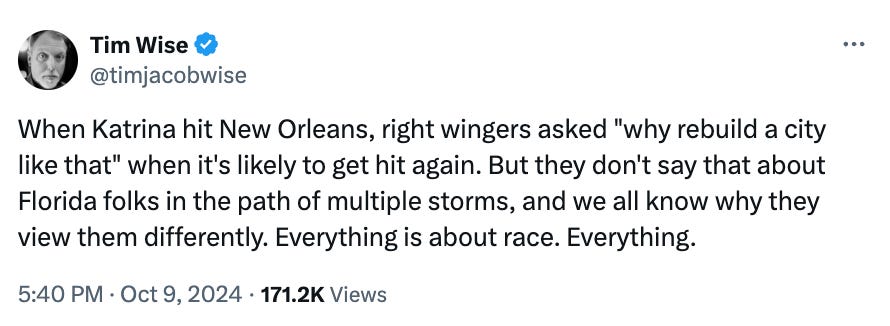
Again, not to compare the storms and devastation— I did want to share some thoughts and, you guessed it, history, behind the views and response to Katrina and how race played a major part in coverage.
The Racial Injustice of Hurricane Katrina
Hurricane Katrina was one of the most devastating natural disasters in U.S. history, struck the Gulf Coast in August 2005, causing catastrophic damage. The storm was a tragedy, but what followed was misstep after misstep deeply influenced by systemic racial injustice and government failure. The tragedy exposed long-standing racial inequities, as Black communities bore the brunt of the storm’s devastation and received inadequate responses. The aftermath of Katrina revealed stark differences in how survivors were treated and perceived based on race, and raised serious questions from many in our community about about racism in both the media and public policy.
We all remember this gem:
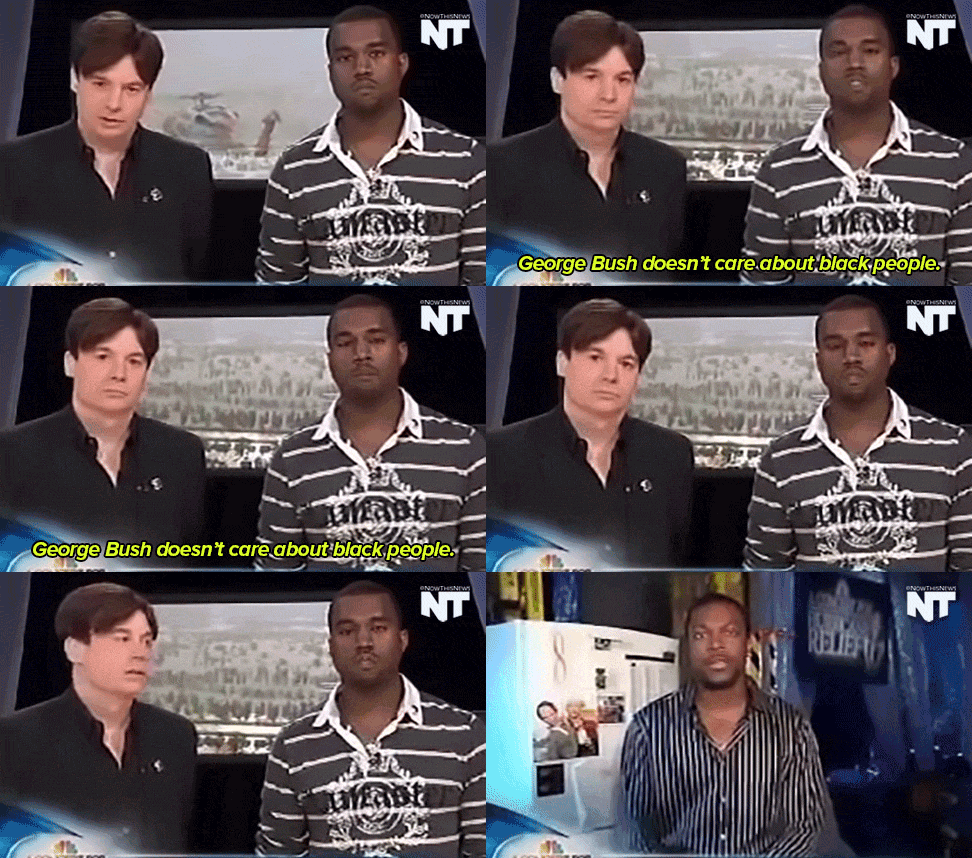
The coverage was bad and for many it felt like the government chose NOT to act for a long time leaving the city and those who didn’t have the money and privilege to leave, to figure it out.
But first, the coverage—
Racism in Perception: The “Looters” vs. “Survivalists” Narrative
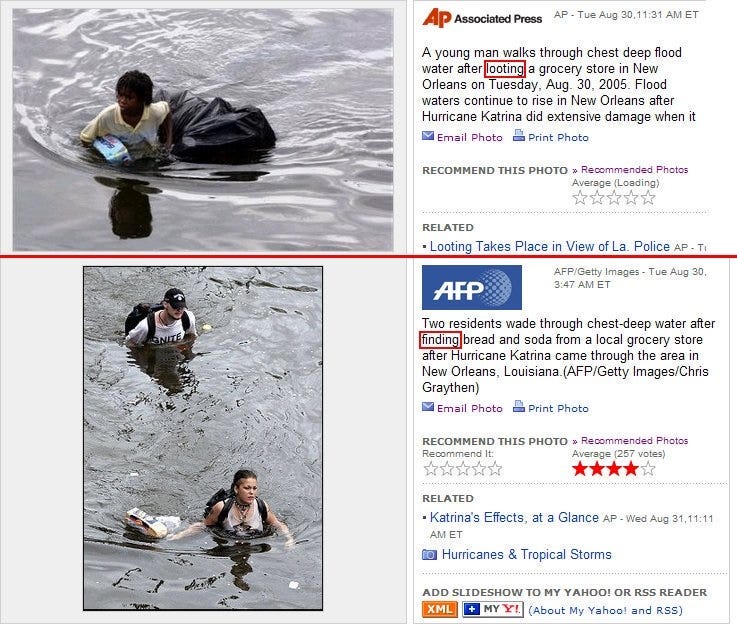
One of the most glaring examples of racial injustice following Hurricane Katrina was the difference in how Black and white survivors were portrayed in the media. In the chaos that followed the storm, images and reports of desperate people searching for food and supplies flooded the airwaves. However, the media’s depiction of these survivors was often framed by racial bias. Photographs of Black individuals were frequently captioned with terms like “looters,” while images of white individuals performing the same actions were described as “survivalists” or “finding” food. This narrative perpetuated the harmful stereotype that Black people are inherently criminal, while white people are resourceful and resilient under pressure.
The distinction in language was not just a matter of media framing; it reflected broader societal attitudes toward race. The perception of Black New Orleanians as lawless and dangerous reinforced a long history of racialized fear and prejudice. This bias informed public opinion and policy decisions, shaping the way the response to Katrina unfolded. Black survivors, already disproportionately affected by poverty and displacement, were often criminalized for their attempts to survive in an environment where basic resources like food and water were unavailable. In contrast, white survivors were given more empathy and seen as victims of circumstance.
Political Resistance to Rebuilding—Why Rebuild the Black City
The racial response to Katrina was further compounded by political debates over whether or not to rebuild New Orleans. Some conservative politicians, particularly within the Republican Party, argued against fully rebuilding the city, citing the potential for future flooding. They claimed that it was impractical to invest billions in a city located below sea level, one that they deemed destined to face similar disasters in the future. (Weird though how this doesn’t come up with other cities in…idk, Florida?) However, beneath this allegedly pragmatic argument lay deeper racial and economic concerns.
New Orleans, before Katrina, was a city with a predominantly Black population, a vibrant culture, and a deep history of racial inequality. The argument against rebuilding was often intertwined with the fact that the parts of the city most affected—poorer, predominantly Black neighborhoods—were considered not worth saving. These areas were often neglected in federal and state recovery plans, further marginalizing Black residents.
Government Failure to Act: Systemic Racism in Action
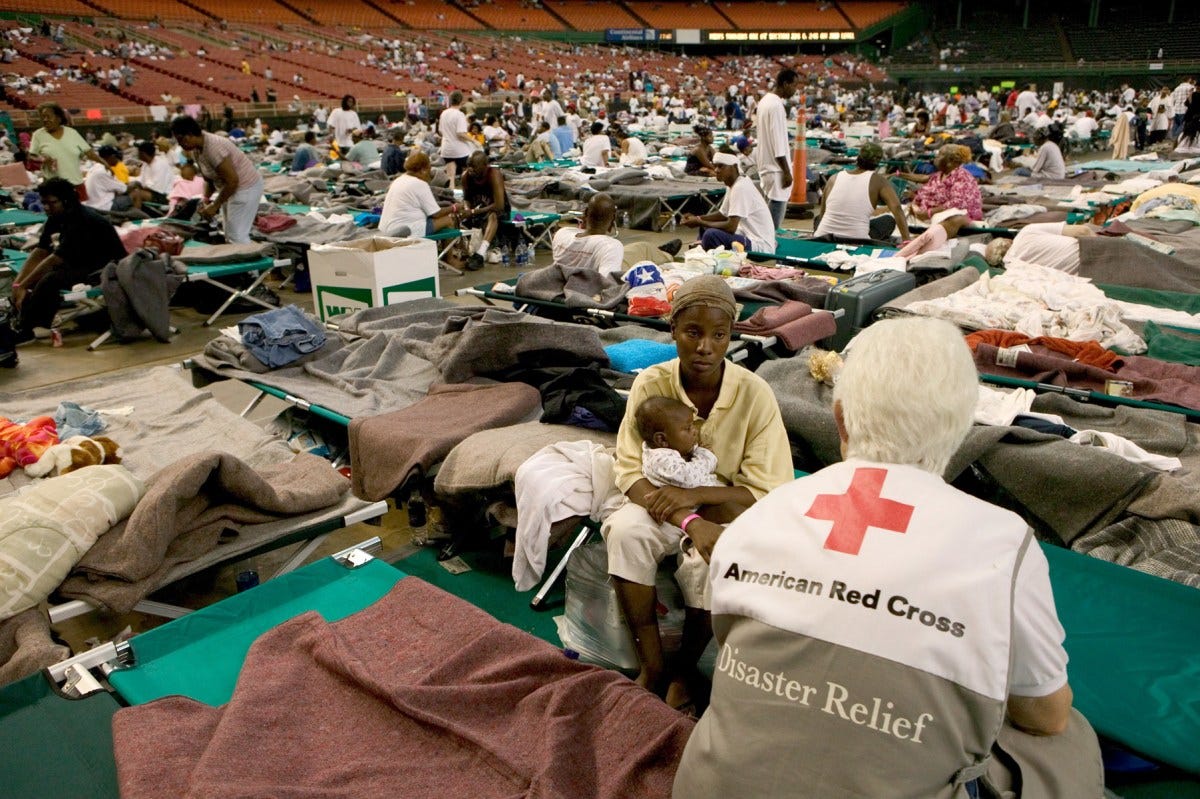
The federal, state, and local governments failed to respond adequately to the crisis in New Orleans, and this failure disproportionately impacted Black communities. In the days following Katrina, the poorest and most vulnerable residents—predominantly Black—were left stranded in their homes or in shelters like the Louisiana Superdome without food, water, or medical care for days. The lack of an effective evacuation plan for those without cars or the means to escape the city before the storm highlighted the systemic neglect of impoverished, predominantly Black neighborhoods.
Driving by the Superdome last week, I couldn’t shake the image of the Black families, often with children, trying to survive on the turf of a football stadium.
The government’s response reflected deep-rooted racial inequality. Black residents of New Orleans were not only more likely to live in the lower-lying, flood-prone areas of the city, but they also faced higher rates of poverty and limited access to transportation, housing, and health services. This combination of factors made them more vulnerable to the storm and less likely to receive timely assistance. While the government’s failure to act was widely condemned, it was Black communities that paid the highest price for this neglect.
And Then Came the Gentrifiers
After Katrina, and very much delayed, programs and reconstruction funds were created to rebuild the city…sorta. As the programs slowly rolled out, they were exploited by for profit developers instead of people who could use the help. Billions of dollars in federal aid were allocated for rebuilding, but much of it ended up in the hands of developers who prioritized profit over the needs of displaced residents. This led to the rapid gentrification of certain areas of New Orleans, displacing many of the city’s original Black residents.
Public housing units that had been home to low-income Black families were demolished and replaced with mixed-income developments, which many of the original residents could no longer afford. This shift contributed to a demographic change in the city, with wealthier, often white newcomers moving into redeveloped neighborhoods, while Black residents were pushed to the margins or forced to leave New Orleans altogether. If you are curious where they went— well National Geographic mapped out the so called “Katrina Diaspora” and in the year following the storm over 16,000 HOUSEHOLDS had relocated to Houston, TX.
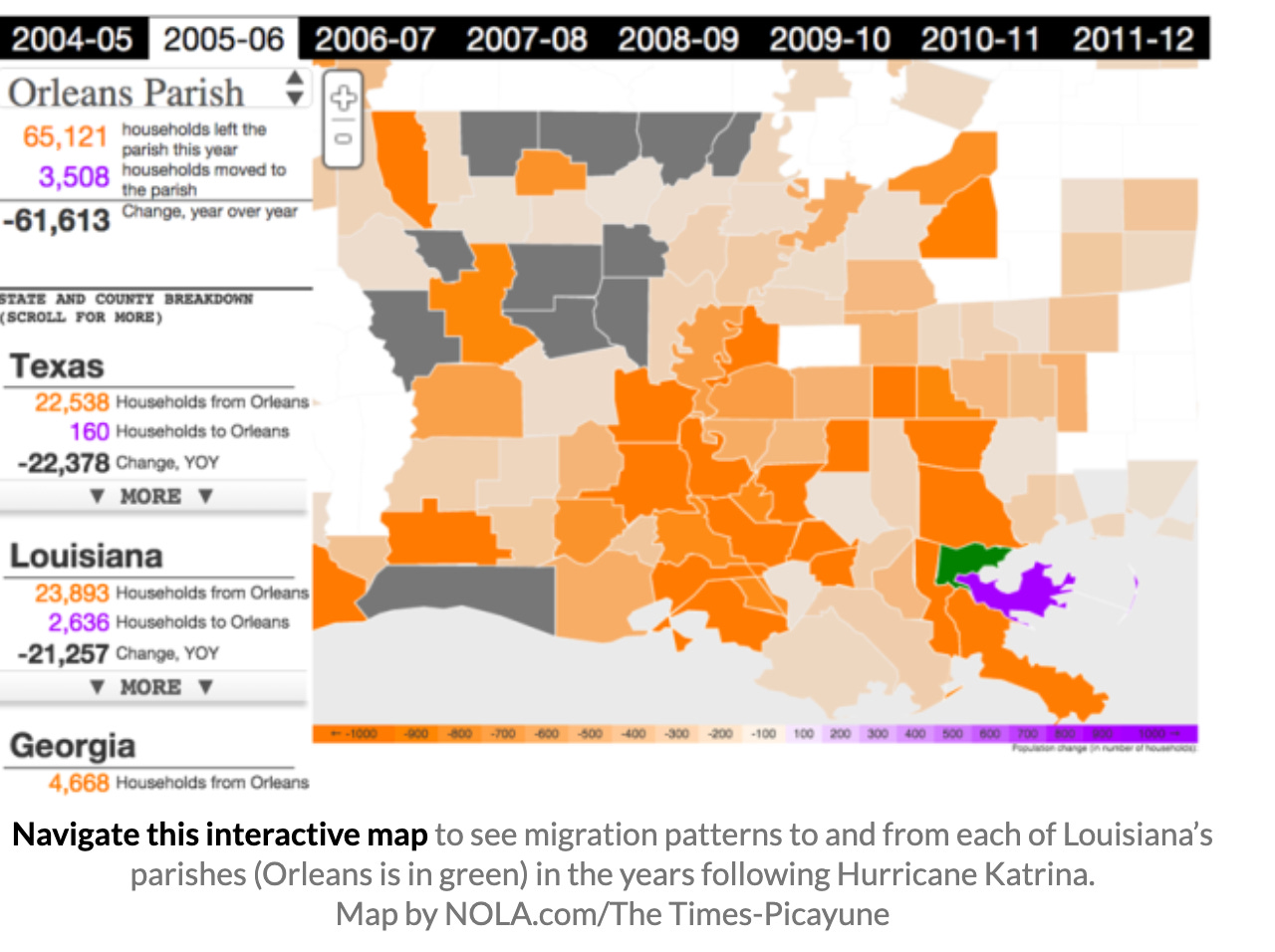
Hurricane Katrina fundamentally altered the demographic makeup of New Orleans. Prior to the storm, the city was majority Black, with African Americans making up nearly 67% of the population. In the aftermath of the hurricane, however, many Black residents were unable to return to their homes due to the destruction of their neighborhoods, the lack of affordable housing, and the slow pace of recovery efforts in predominantly Black areas. As a result, the city’s Black population significantly declined, while the white population recovered more quickly.
After Katrina, more than 175,000 Black people left the city of New Orleans while the white population has roughly equaled its pre-Katrina level as of 2023.
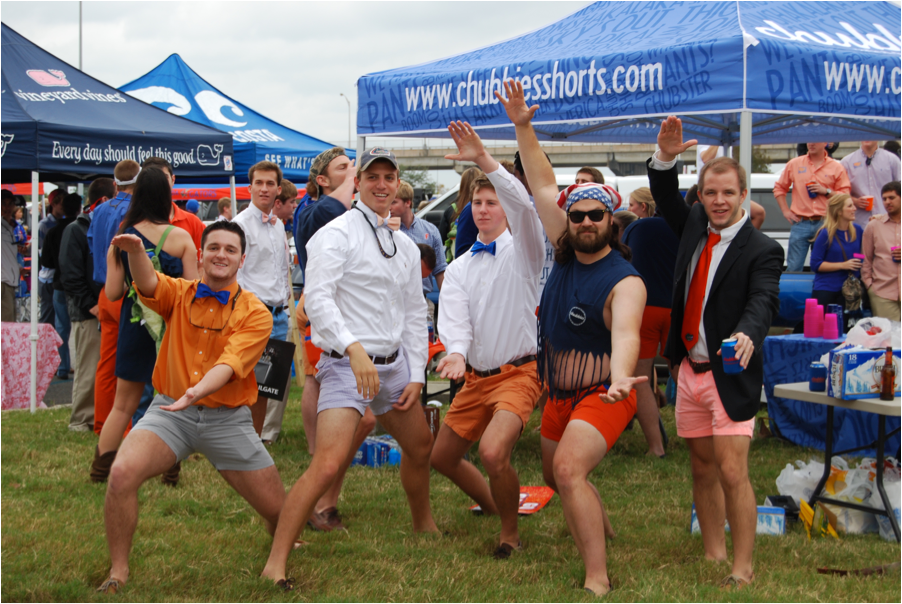
The loss of the Black population was not only a demographic shift but also a cultural and social one. New Orleans had been a hub of Black culture, music, and history, and the displacement of its Black residents represented a profound loss to the city’s identity. And take it from someone who was there recently…you FEEL it. The vibes are no longer that of the “Big Easy” and walking felt more like an SEC football tailgate.
Hurricanes Suck
Anytime I hear a hurricane is coming, I think about all of this with Katrina. How one day literally changed the course of history for so many and altered the culture of a region, simply because the people there weren’t worth saving. I hope we never see this type of devastation again— and this is one fear I have with the coming election. One group would obviously commit resources to areas impacted by natural disasters no matter who lived there and the other…well the other option requests you grovel first and checks to see how many people voted for him before issuing assistance— not great, not great at all.